
Business
Best SEO Tools for Small Businesses: A Beginner’s Guide

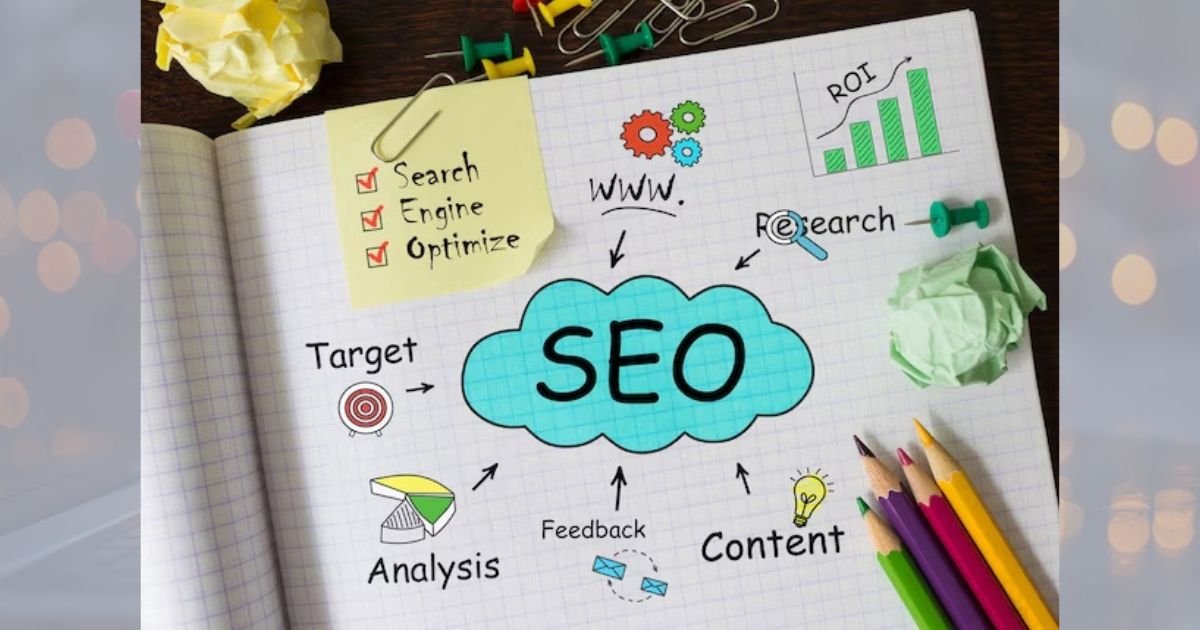
Small business must therefore acquire the net as an advertising tool to publicize their companies. SEO stands for search engine optimization, a factor that determines the standing of your website in a SERP or search engine results page mainly on Google. However, for a newbie in SEO, it is quite challenging to find one’s way around the tools. Well, this blog is here to make it easier for you to understand all that you need to know about SEO software. We will narrow down our chosen best SEO tools for small businesses including the local service providers, restaurants, and e-commerce stores. No matter whether you are a beginner in writing or an experienced writer who wishes to know how to write even more effectively, this guide shall explain all the aspects in a rather basic manner and also shall mention certain procedures to follow.
What is SEO and Why is it Important for Small Businesses?

In short, SEO means Search Engine Optimization. It’s more of the process of bringing your website to a level that it will rank higher in the search engine results, increasing your search traffic. To small companies, achieving high rankings on search sites equals more search traffic, and implicitly, more clients. This can make a lot of impact especially to local service providers or e commerce businesses that rely on web presence for growth. In other words, good SEO enables your website to be appreciated and viewed by prospects without costing too much on advertisement, making it an essential part of digital marketing. Now that we’ve established what SEO tools are for small business owners, let’s go deeper into discussing everything you need to know about them in this guide.
1. Google Search Console: The Foundation of Your SEO
Google Search Console, also known as Webmaster Tool, is a free tool that Google provides the user to assist him in checking the effectiveness of the website within the Search Engine. That is why it is ideal for newbie in a sense that it gives an overview on how your website looks like, traffic source of keywords, and presence of technical issues that may hamper ranking.
Actionable Step: When you complete the setup of Google Search Console, look through the “Search Analytics” tab to find out the keywords that are used by the people who visit your site. This will help you focus on your needs for updating content. It is crucial for small businesses to monitor the performance of your website along with looking out for discrepancies in the results.
2. Moz Local: Perfect for Small, Local Businesses
If you are a local business or a restaurant, Moz Local is one of the most useful best SEO tools for small businesses aimed at local SEO and managing your Google Business Profile. Local SEO on the other hand, refers to increasing your websites visibility in the local searches to the potential customers. Moz Local helps make sure your business information is the same everywhere, including Google My Business, Yelp, Facebook, and more, which is crucial for local SEO performance.
Actionable Step: Using Moz Local, you can get your business listing, claim it and Moz Local will take the initiative of updating your business information on the available directories. This way potential customers in your geographic area looking for services that you offer will be able to spot you more easily. This is because small business owners depend on local consumers, and Moz Local cannot be an exception.
3. Semrush: A Complete SEO Toolkit for Competitive Research
Features which I’ve already mentioned like keyword research, backlink analysis, and competitive analysis can be found in SEMrush. Even though some of its tools might appear sophisticated at first glance, SEMrush is a great tool for small e-commerce stores that like to keep an eye on their competition. To those wanting more than straightforward lists of results, SEMrush offers an explanation of how and where rivals are ranking and which terms they are focusing on.
Actionable Step: Using SEMrush, you can look for the keywords that your competitors use so that you can target them in turn. For instance, assume that you are the owner of a local restaurant and you would wish to know why a competitor is ranking high for the ‘best pizza in town’ keyword; SEMrush will assist you to figure this out and in the process of formulating your content, you would also choose this keyword.
4. Yoast SEO: The Best Plugin for WordPress Sites
Yoast SEO is one of the simpler tools if your website is created using the WordPress platform, making it the best SEO software for beginners. It guides you on how to make the best out of your on-page content; this involves advising you on how to adjust your keyword arrangement, format, and even meta descriptions for better SEO optimization. The best part is that Yoast SEO offers you suggestions right when you are writing your blog post or page, enhancing your SEO performance.
Actionable Step: Ensure you have the Yoast SEO WordPress plugin on your WordPress site and improve every page using this best SEO software. Small e-commerce store or service provider – the Yoast makes doing SEO friendly for beginners, acting as a free tool to enhance your online presence. The only approach that must be taken is to stay concentrated on enhancing each of the page’s contents as the Yoast suggests, utilizing effective SEO software.
5. Ahrefs: Best for Backlink Analysis
Back links (when another site links to yours) are very important in SEO because they are an indication to Google that your content is relevant, contributing to your overall search traffic. One of the top recommendations of best SEO tools for small business companies is Ahrefs since it can help establish strong backlinks. Backlinks analysis informs you of your backlinks, your competitors’ backlinks and opportunities that are open to your site.
Actionable Step: Check the URLs where your competitors are being linked and use Ahrefs to get the list of those websites, then write to this web resources to offer a link. For instance, if you are a local service provider, then you will benefit from being featured in local blogs or directories.
6. Ubersuggest: Budget-Friendly SEO Tool for Beginners
Ubersuggest is also one of the most affordable best SEO tools available out there today. Created by Neil Patel, it consists of things like keyword ideas, content ideas as well as SEO audit. For small businesses that may have a small budget for their SEO, UberSuggest has a good deal where you pay for some of the tools and the others are free and as such, beginners will benefit when using the tool as they will be advised on what kind of keywords to use.
Actionable Step: To follow the above process, try to use the free version of Ubersuggest where you will get the keyword ideas associated with your business. For instance, in case you own a bakery, the tool will suggest you such long-tail keywords as ‘best bakery cakes for weddings’ based on search volume. It will also help to focus on individual customer needs better this way.
7. Google My Business: Essential for Local SEO
Any local small business owner that deals in services or products must join the Google My Business (GMB) platform. This tool enables you to decide how your business is represented on Google Search and Google Maps. The accuracy and specificity of the location in the listing will determine a business’s likelihood of featuring on local searches.
Actionable Step: Create or pull together existing Google My Business page and make sure that everything such as the available hours, services that you offer and photos are updated. Some of the things that help your business rank locally in search results are reviews, so, get your customers to write a review. This is especially for restaurants and any local service provider in the area of industry of the organization.
8. Keyword Planner: Best for Finding Keywords
Google’s Keyword Planner allows business owners to identify keywords that people are using in their search, providing valuable insights into search volume. This is very useful for small business which is starting their SEO journey as you can check on the competitive density on the keywords and therefore avoid targeting keywords that you cannot get to the top to ‘fight’ for.
Actionable Step: Once you have chosen a category you want to focus your site on, for example e-commerce or local business, use Keyword Planner to find keywords. For instance, if your business is a bakery shop, some of the keywords you can search for include; “best bakery for birthdays.” These keywords will assist in developing content, which targets the probable consumers.
The Importance of On Going SEO

Another very important factor to know about SEO strategies is that it is a continuous process. Remember, implementing SEO tools is the first step after which you are supposed to routinely assess the progress made, as well as tweak your plan in order to respond to competitor actions in the digital marketing landscape. SEO is sometimes referred to as Search Engine Maintenance and it means that you should be updating your site in order to sustain its optimum ranking and traffic. Google Analytics to name but one of the many analytical tools used in analyzing your site traffic and user behaviors are central to this.
Actionable Step: Devote at least one day in a month to look into your SEO strategies. This is where you track your keyword rankings, backlinks, and traffic Whether you’re using free or paid tools, checking it will remind you how your SEO is doing. This helps your small business to continue reaping the returns of the tools that you had availed to the business.
Case Studies: Real-World Success Using SEO Tools
One local bakery tried Google My Business, Moz Local, and SEMrush to boost their online presence to the top tier. This was accomplished through the work on their Google My Business profile and using the tools of SEMrush regarding the localization of keywords to increase website traffic by 2 times during the six-month period. Another is used by a small e-commerce store focusing on the Ahrefs backlinks building to expand their site’s authority for the 30% sales boost.
Conclusion: Start Optimizing with the Best SEO Tools for Small Business
As we have seen, now it is high time that you start applying some of these best SEO tools for small businesses to enhance the online reputation of your brand. So, no matter if you’re a local company that provides some services or a restaurant, or even an online shop, each of these tools is useful. The important thing is to stick with the basic ideas, cover the offers that will be interesting to inexperienced users, and then gradually expand the list to improve SEO optimization. But as you know, SEO is not for the faint of heart as well as an undertaking that takes months if not years but it pays in the long run if done right.
Ready to grow your small business with SEO? Start by signing up for Google Search Console and Moz Local today. These tools will set the foundation for your SEO success!


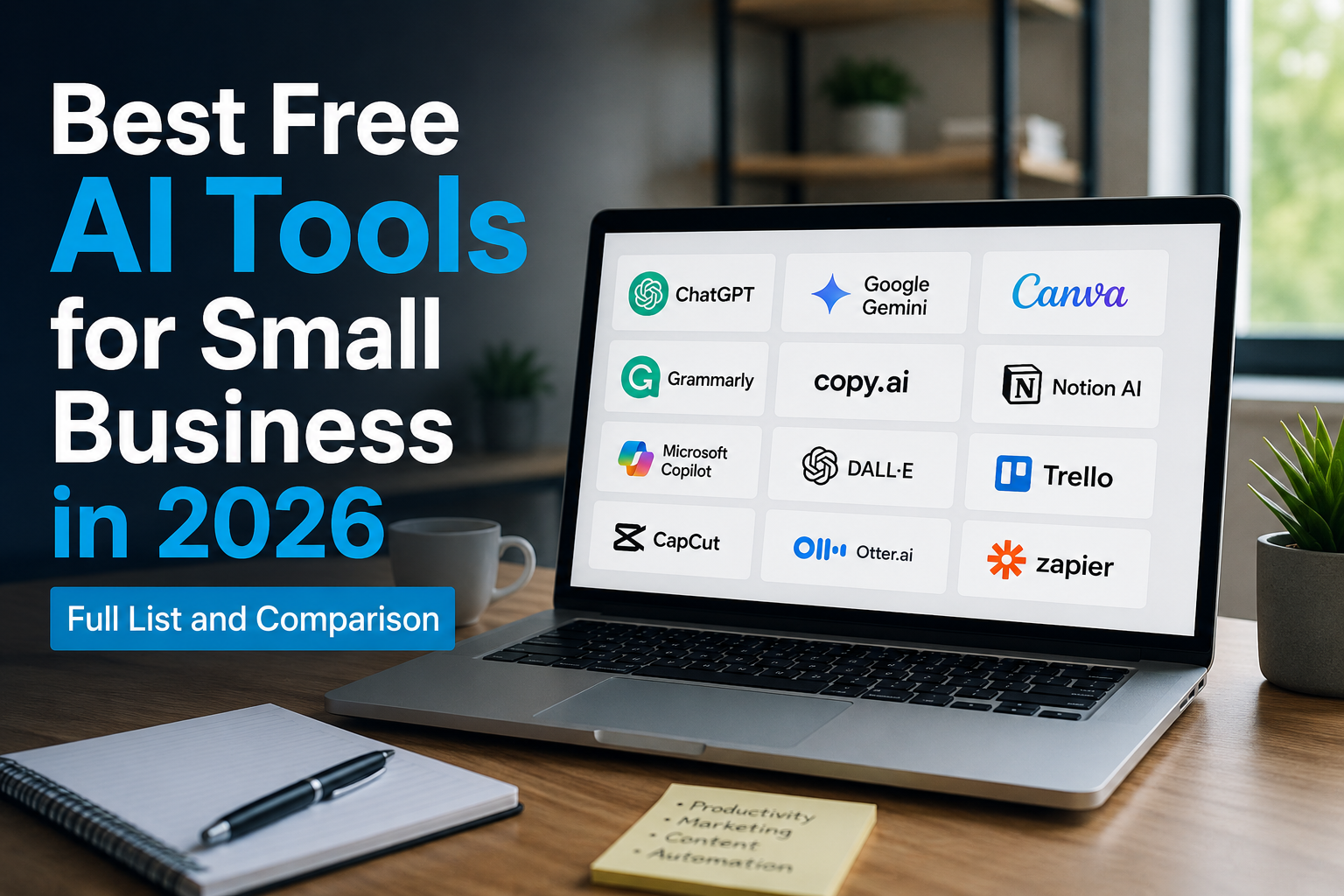
Introduction
Running a small business in 2026 is more competitive than ever. Business owners are expected to do more with less, manage operations efficiently, and deliver excellent customer experiences. This is where artificial intelligence is making a real difference.
Today, the best free AI tools for small business 2026 are helping entrepreneurs automate repetitive work, improve decision making, and scale faster without large budgets. Whether you are managing marketing, sales, customer support, or operations, AI tools are becoming essential.
In this guide, you will find a carefully researched list of the most effective free AI tools for business owners along with a clear comparison to help you choose the right solutions.
Why Small Businesses Are Adopting AI Rapidly?
AI adoption among small businesses has increased significantly because of accessibility and affordability. Many platforms now offer powerful free plans that deliver real value.
Here are the key reasons why small businesses are investing in AI software for small business free:
- Saves time by automating repetitive tasks
- Reduces operational costs
- Improves customer experience through personalization
- Enhances marketing performance
- Provides data driven insights for smarter decisions
Instead of replacing human effort, AI enhances productivity and allows business owners to focus on growth strategies.
Best Free AI Tools for Small Business in 2026
1. AI Content Creation Tools
Content is one of the most important drivers of online growth. AI writing tools help businesses create high quality content quickly and consistently.
Top Tools:
- ChatGPT
- Copy.ai
- Writesonic
Use Cases:
- Blog writing
- Email campaigns
- Product descriptions
- Social media captions
Why It Matters:
These tools reduce the time spent on writing and help maintain consistency in brand voice.
2. AI Marketing and Social Media Tools
Marketing requires creativity and consistency. AI tools simplify campaign creation and scheduling.
Top Tools:
- Canva AI
- Predis.ai
- Buffer AI Assistant
Use Cases:
- Social media post generation
- Ad copy creation
- Visual content design
- Content scheduling
Key Benefit:
Small teams can manage professional marketing campaigns without hiring a full marketing department.
3. AI Customer Support Tools
Customer experience is a major factor in business success. AI powered chatbots allow businesses to provide instant support.
Top Tools:
- Tidio
- Crisp
- Chatbase
Use Cases:
- Website chatbots
- Automated responses
- Lead qualification
- FAQ handling
Business Impact:
These tools improve response time and customer satisfaction while reducing workload.
4. AI CRM and Sales Tools
Managing leads and closing deals becomes easier with AI driven insights.
Top Tools:
- HubSpot CRM
- Zoho CRM
- Freshsales
Use Cases:
- Lead tracking
- Sales forecasting
- Customer segmentation
- Automated follow ups
Why It Is Important:
AI helps identify high value leads and increases conversion rates.
5. AI Productivity and Workflow Tools
Efficiency is critical for small businesses with limited resources.
Top Tools:
- Notion AI
- ClickUp AI
- Trello with AI features
Use Cases:
- Task management
- Documentation
- Workflow automation
- Team collaboration
Key Advantage:
These tools streamline operations and reduce manual effort.
6. AI Finance and Accounting Tools
Financial management can be complex, but AI simplifies it.
Top Tools:
- Wave
- QuickBooks
- Vic.ai
Use Cases:
- Expense tracking
- Invoice automation
- Financial reporting
- Cash flow monitoring
Why It Matters:
Accurate financial data helps business owners make better decisions.
Comparison of the Best Free AI Tools for Small Business 2026
| Category | Tool | Best For | Free Plan |
| Content Creation | ChatGPT | Writing and communication | Yes |
| Marketing | Canva AI | Design and social media | Yes |
| Customer Support | Tidio | Chatbots and live chat | Yes |
| CRM and Sales | HubSpot CRM | Lead management | Yes |
| Productivity | Notion AI | Workflow and organization | Yes |
| Finance | Wave | Accounting and invoicing | Yes |
How to Choose the Right AI Tools for Your Business
Choosing the right tools depends on your business goals and challenges.
Identify Your Priorities
Focus on the area where you need the most improvement such as marketing, sales, or operations.
Start with Free Plans
Test different tools before committing to paid versions.
Look for Ease of Use
Choose tools that are simple and require minimal training.
Consider Integration
Make sure the tools can work with your existing systems.
Plan for Growth
Select tools that offer scalable features as your business expands.
Future Trends in AI for Small Businesses
AI is evolving rapidly and small businesses will benefit even more in the coming years.
Key trends to watch:
- More personalized customer interactions
- Advanced automation with minimal input
- AI driven decision making tools
- Increased availability of free AI platforms
Businesses that adopt AI early will have a strong competitive advantage.
Conclusion
The rise of AI has transformed how small businesses operate. The best free AI tools for small business 2026 provide powerful capabilities that were once only available to large companies.
From content creation and marketing to customer support and finance, these tools help business owners save time, reduce costs, and grow efficiently.
If you are not already using free AI tools for business owners, now is the right time to start. Even a small investment of time in the right tools can deliver significant results.
Start with a few tools that match your needs and expand as your business grows.
Frequently Asked Questions
What are the best free AI tools for small business in 2026?
Some of the best tools include ChatGPT, Canva AI, HubSpot CRM, Notion AI, and Tidio.
Are free AI tools enough for small businesses?
Yes, many free plans offer powerful features that are sufficient for small businesses, especially in the early stages.
How can AI help small business owners?
AI helps automate tasks, improve marketing, enhance customer support, and provide data insights for better decisions.
Is AI expensive for small businesses?
Not necessarily. Many AI software for small business free options are available with strong capabilities.
Which AI tool should I start with?
Start with a tool that solves your biggest challenge, such as content creation or customer support.
Pro Tip
Begin with two or three tools and focus on mastering them. Once you see results, gradually expand your AI toolkit for better efficiency and growth.
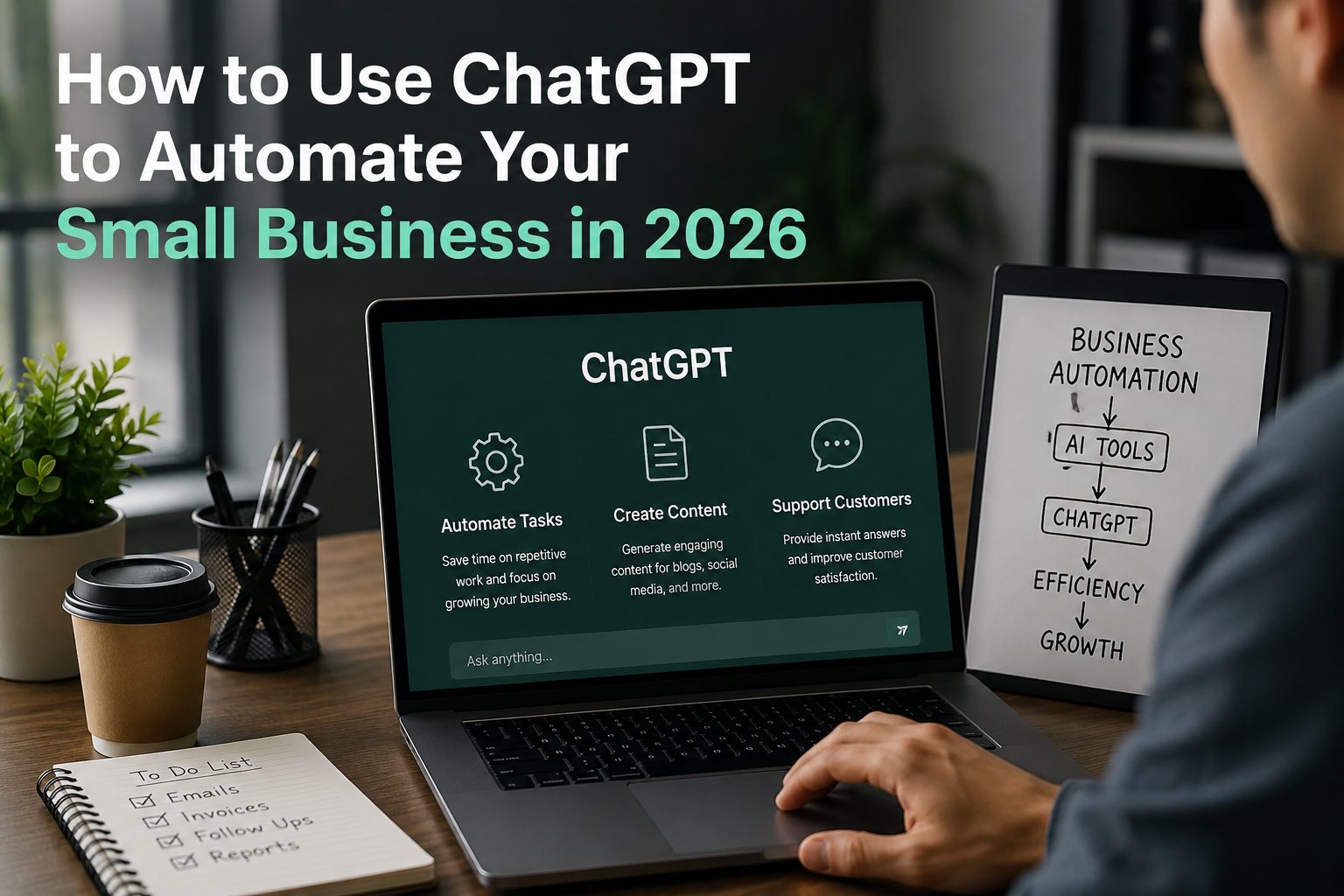
Running a small business has never been easy, but in 2026, business owners have access to tools that previous generations could only dream of. Artificial intelligence is no longer reserved for large corporations with massive budgets. Today, even a small local business can use advanced AI technology to save time, reduce costs, improve customer service, and streamline everyday operations. One of the most powerful tools leading this transformation is ChatGPT.
From handling customer enquiries and creating marketing content to assisting with sales and administrative tasks, ChatGPT is helping businesses work smarter rather than harder. As competition continues to increase across nearly every industry, business owners are looking for ways to achieve more without constantly increasing their workload. This is where ChatGPT for small business automation is making a significant impact.
If you’re wondering how to use ChatGPT for business in 2026, this guide will walk you through the practical ways it can automate daily operations and help your business become more efficient.
Why Small Businesses Are Turning to ChatGPT?
Small business owners often wear multiple hats. On any given day, they may find themselves acting as a marketer, salesperson, customer service representative, content creator, and operations manager. While this level of involvement can help keep costs down, it often limits growth because there are only so many hours in a day.
ChatGPT helps solve this problem by taking over repetitive and time-consuming tasks. Instead of spending hours answering similar customer questions, writing social media captions, drafting emails, or creating content, business owners can use AI to complete these tasks in minutes.
The biggest advantage isn’t necessarily replacing people. Instead, it’s allowing business owners and employees to focus their energy on activities that require creativity, strategy, and relationship building. AI handles the routine work, while humans focus on growing the business.
How ChatGPT Is Changing Business Operations in 2026?
The capabilities of ChatGPT have expanded significantly in recent years. What started as a conversational AI tool has evolved into a powerful virtual assistant capable of supporting multiple areas of a business.
For example, imagine a small digital marketing agency managing several clients. The team spends hours each week creating social media content, responding to enquiries, writing reports, and preparing proposals. With ChatGPT, many of these processes can be completed much faster. Drafts can be generated within seconds, allowing the team to focus on refining and personalising the final output.
The same principle applies to eCommerce stores, local service businesses, consultants, freelancers, and online entrepreneurs. Regardless of the industry, automation helps increase productivity and improve efficiency.
Automating Customer Support With ChatGPT
Customer support is one of the most common areas where businesses benefit from automation. Customers expect fast responses, and delays can often result in lost opportunities.
Many businesses receive the same questions repeatedly. Customers ask about pricing, services, opening hours, delivery times, refunds, or product information. Instead of manually responding to every enquiry, ChatGPT can help generate instant answers and provide support around the clock.
When integrated into a website or messaging platform, ChatGPT can handle common enquiries automatically. This improves response times and creates a better customer experience. Customers receive the information they need quickly, while business owners spend less time managing repetitive conversations.
Although complex situations may still require human involvement, AI can often resolve a large percentage of routine support requests without any intervention.
Creating Marketing Content Faster
Content marketing remains one of the most effective ways to attract customers online. Businesses that consistently publish valuable content often generate more website traffic, improve their search engine rankings, and build stronger relationships with their audience.
However, creating high-quality content requires time and effort. This is where ChatGPT becomes particularly valuable.
Business owners can use ChatGPT to generate blog post ideas, create article outlines, write social media captions, draft email campaigns, and even assist with video scripts. Instead of staring at a blank page, marketers can start with a well-structured draft and customise it to match their brand voice.
This doesn’t mean publishing AI-generated content without reviewing it. The best results come from combining AI efficiency with human expertise. ChatGPT handles the heavy lifting, while the business owner adds unique insights, experience, and personality.
Improving Social Media Management
Maintaining an active social media presence can feel like a full-time job. Between content planning, writing captions, responding to comments, and generating ideas, many business owners struggle to remain consistent.
ChatGPT can simplify the entire process. It can help generate content calendars, suggest post ideas, write engaging captions, and adapt content for different platforms.
For example, a business owner could ask ChatGPT to create thirty social media post ideas for the next month. Within minutes, they would have enough content inspiration to maintain a consistent posting schedule. This not only saves time but also reduces the stress associated with constantly creating new content.
Using ChatGPT for Email Marketing
Email marketing continues to be one of the highest-performing digital marketing channels. Despite the rise of social media and other communication platforms, email remains an effective way to nurture leads and maintain customer relationships.
ChatGPT can assist with creating welcome sequences, promotional emails, newsletters, follow-up messages, and customer retention campaigns. Instead of spending hours writing individual emails, businesses can quickly generate professional drafts and refine them before sending.
This allows companies to communicate more consistently with their audience while reducing the workload associated with campaign creation.
Streamlining Sales Activities
Sales is another area where AI is creating significant value. Many sales processes involve repetitive communication, research, and documentation.
ChatGPT can help draft sales proposals, write follow-up emails, prepare outreach messages, and even assist with lead qualification questions. This enables sales teams to spend more time building relationships and less time performing administrative tasks.
For small businesses with limited resources, this efficiency can make a substantial difference. Faster communication often leads to quicker responses, better customer engagement, and ultimately more opportunities to generate revenue.
AI Tools to Automate Small Business Tasks Alongside ChatGPT
While ChatGPT is incredibly powerful on its own, combining it with other AI solutions can unlock even greater automation opportunities.
Many businesses use workflow automation platforms to connect different systems and automate routine processes. For example, when a lead submits a contact form, automation software can instantly send the information to a CRM, notify the sales team, and generate a follow-up email.
Design tools powered by AI can help create marketing materials, while productivity platforms can summarise meetings, organise information, and manage projects more efficiently.
When businesses combine ChatGPT with other AI tools to automate small business tasks, they create workflows that reduce manual effort across multiple departments. This allows teams to achieve more without increasing headcount or operational costs.
Best Practices for Using ChatGPT Effectively
While ChatGPT can deliver impressive results, the quality of its output depends largely on the instructions it receives. Businesses that provide detailed prompts generally achieve better outcomes than those using vague requests.
When using ChatGPT, it’s important to clearly define the task, target audience, desired tone, and objective. The more context provided, the more useful the response will be.
It’s also important to review and edit AI-generated content before publishing or sending it to customers. While AI can produce excellent drafts, human oversight ensures accuracy, consistency, and alignment with the brand’s voice.
Businesses that treat ChatGPT as a collaborative assistant rather than a complete replacement for human input often achieve the best results.
The Future of Small Business Automation
The role of AI in business will continue to expand over the coming years. Tasks that currently require manual effort will increasingly become automated, allowing businesses to operate more efficiently and scale more effectively.
Companies that embrace automation today are positioning themselves for long-term success. By reducing repetitive work, improving productivity, and enhancing customer experiences, AI creates opportunities for growth that were previously difficult for smaller businesses to achieve.
As technology continues to evolve, the gap between businesses that adopt AI and those that don’t is likely to become even more noticeable.
Conclusion
Learning how to use ChatGPT for business in 2026 is no longer just a competitive advantage, it’s becoming a practical necessity for many small businesses. Whether you’re looking to improve customer support, create content faster, streamline sales processes, or reduce administrative workload, ChatGPT offers a flexible and cost-effective solution.
The rise of ChatGPT for small business automation is changing how entrepreneurs manage their daily operations. When combined with other AI tools to automate small business tasks, such as agentic AI tools for small businesses, it can help businesses save time, increase efficiency, and focus on what matters most: serving customers and growing sustainably.
For small business owners willing to embrace innovation, ChatGPT represents one of the most accessible and impactful technologies available today.

The year 2026 marks a significant shift in technology, transforming how small businesses operate, expand, and support their clients. The rise of Agentic AI Tools is one of the most interesting changes. These tools are more advanced than regular automation because they can make informed decisions, learn from data, and work independently to complete complex tasks. They work great for small businesses that need to get more done with less money and time.
Agentic AI platforms help small businesses boost efficiency and stay competitive by automating tasks such as customer service, inventory management, and marketing. Technologists use the term “Autonomous AI tools” to describe systems that think, plan, and act with little help from a person. AI workflow automation tools driven by agentic models are very useful for entrepreneurs and startups because they save time and make tasks easier. This article discusses five of the best Agentic AI Tools for small businesses in 2026. It will also show you how these systems can change the way you do your job.
TaskMind – The Ultimate Workflow Optimizer
TaskMind is the leader in AI workflow automation, designed specifically for small teams and solopreneurs. Smart algorithms enable this powerful agentic AI tool to plan, assign, and execute tasks across departments. It learns from how people use it and suggests more effective ways to perform everyday tasks. TaskMind automates the entire process while still allowing you to stay in control, whether you’re managing inventory, handling invoices, or scheduling meetings.
It doesn’t just follow rules like older software did; it changes and thinks like a smart helper. TaskMind integrates seamlessly with many common business software applications, including Slack, Trello, and QuickBooks. It is one of the most useful and agentic AI platforms. Less work needs to be done repeatedly, allowing teams to focus on the most important tasks. TaskMind is a good choice if you want to save time and get better results without adding more people. It’s ideal for companies that want smart tools to handle the hard work without constant supervision.
BrandGenie – Autonomous AI for Content and Marketing
Marketing can be time-consuming, but BrandGenie offers a complete solution using Autonomous AI tools. This agentic AI platform plans campaigns, writes emails, creates social media posts, and even develops marketing strategies without needing constant monitoring. It understands the company’s tone, what the audience likes, and the marketing goals. It learns what works best over time and adjusts its methods accordingly. BrandGenie also provides you with information about how your projects are performing, so you can identify what’s working and make adjustments right away.
A small business that doesn’t have a full-time marketing team but still wants to look professional and be busy online should use it. As one of the most advanced Agentic AI Tools, BrandGenie makes AI marketing feel human. It makes AI marketing feel like a person does it. You have more time to run your business because it takes care of the creative and technical chores. BrandGenie’s self-planning feature gives you a significant advantage, whether you’re launching a new product or trying to boost engagement with your brand.
AutoServe – Smart Customer Support Without the Overhead
Small businesses often struggle with providing effective customer service. AutoServe changes the game by giving your customer interactions autonomous AI tools. This agentic AI tool handles questions, returns, follow-ups, and cases that require escalation—all without the need for a full team. It acts like a person talking to you and learns from each exchange to give you better help next time. AutoServe isn’t like other chatbots because it connects to your CRM and support tools.
It anticipates what customers want and helps them avoid problems before they arise. For instance, it can identify trends in complaints and notify business owners of persistent issues. AutoServe is one of the most reliable agentic AI platforms on the market today because it can smartly solve problems. AutoServe is a good investment if you want to keep customers happy without incurring additional expenses. Customers will be pleased with the high-quality assistance you can provide 24/7, and your employees will have more time to focus on other tasks.
FinPilot – Financial Automation with Decision-Making Power
One of the most time-consuming aspects of running a small business is managing finances. FinPilot makes things easier by using Agentic AI Tools that help with more than just accounts. It can analyze your cash flow, identify unnecessary spending, send you bill reminders, and even suggest investments that are best suited for your business. Based on real-time data, this agentic AI tool determines how to manage money. It also keeps up with tax laws and notifies you about any upcoming changes or deadlines.
With AI workflow automation at its core, FinPilot ensures that financial tasks like budgeting, invoicing, and forecasting are handled without errors or delays. It ensures that financial tasks such as budgeting, billing, and forecasting are completed accurately and efficiently, without errors or delays. FinPilot is the best way for businesses to manage their finances without hiring a full-time accountant, as it seamlessly integrates with banking systems. FinPilot gives you better control over your money and a better understanding of your business’s finances, all in one safe and simple package.
HireBotics – Smarter Hiring and HR Automation
Due to a lack of funding, small businesses often have trouble hiring people and managing HR. That changes with HireBotics’ Agentic AI Tools, which are made for hiring, onboarding, and handling employees. This AI tool can write job descriptions, screen applicants, schedule interviews, and even provide feedback tailored to the role’s needs. HireBotics doesn’t just use keywords; it also employs deep learning to assess factors such as cultural fit, long-term potential, and soft skills.
It also automatically conducts performance reviews and tracks employee satisfaction, ensuring they are both happy and productive at work. If you want to have an HR department in your pocket, HireBotics is the best agentic AI platforms. HireBotics accelerates the hiring process and enhances the quality of the candidates selected by leveraging AI workflow automation. It saves time and reduces paperwork while helping small businesses hire more effectively. HireBotics will still be useful after 2026 if you want to add people to your team without adding to your stress.
Conclusion
From 2026 on, small businesses that want to stay ahead will need to use Agentic AI Tools. These tools do more than just automate chores; they also help people think critically, act independently, and continue learning. The way business is conducted is changing due to agentic AI platforms like TaskMind, BrandGenie, AutoServe, FinPilot, and HireBotics. These platforms help you manage your team and funds, find new customers, and provide excellent customer service. Small businesses can work smarter, not harder, when they utilize Autonomous AI tools.
These technologies are leveling the playing field, allowing even small businesses to compete effectively with larger ones. With built-in AI workflow automation, they reduce errors, boost efficiency, and free up time to focus on strategy and growth. These Agentic AI tools are ready to help you make your business smarter. The future is now, and it’s smart, useful, and made just for you. AI can help your small business grow in 2026.
-
 Business2 years ago
Digital Marketing for Doctors: Effective Strategies for Medical Marketing
-
 Business2 years ago
How to Start and Grow a Digital Marketing Agency in 2025
-
 Business2 years ago
The Ultimate Guide to Amazon Advertising: Mastering Amazon Ads for Success
-
 Business2 years ago
Best Guide to SEO Companies for Small Businesses
-
 Crypto1 year ago
Top Altcoins Outperforming Bitcoin in 2025
-

 Business1 year ago
How to Buy Trump Coin in 2025: Step-by-Step Guide + Price Prediction Insights
-

 Technology1 year ago
Introduction to Python for Data Analysis
-
 Technology1 year ago
The Invisible Tech You Use Every Day Without Knowing It